Build Preview
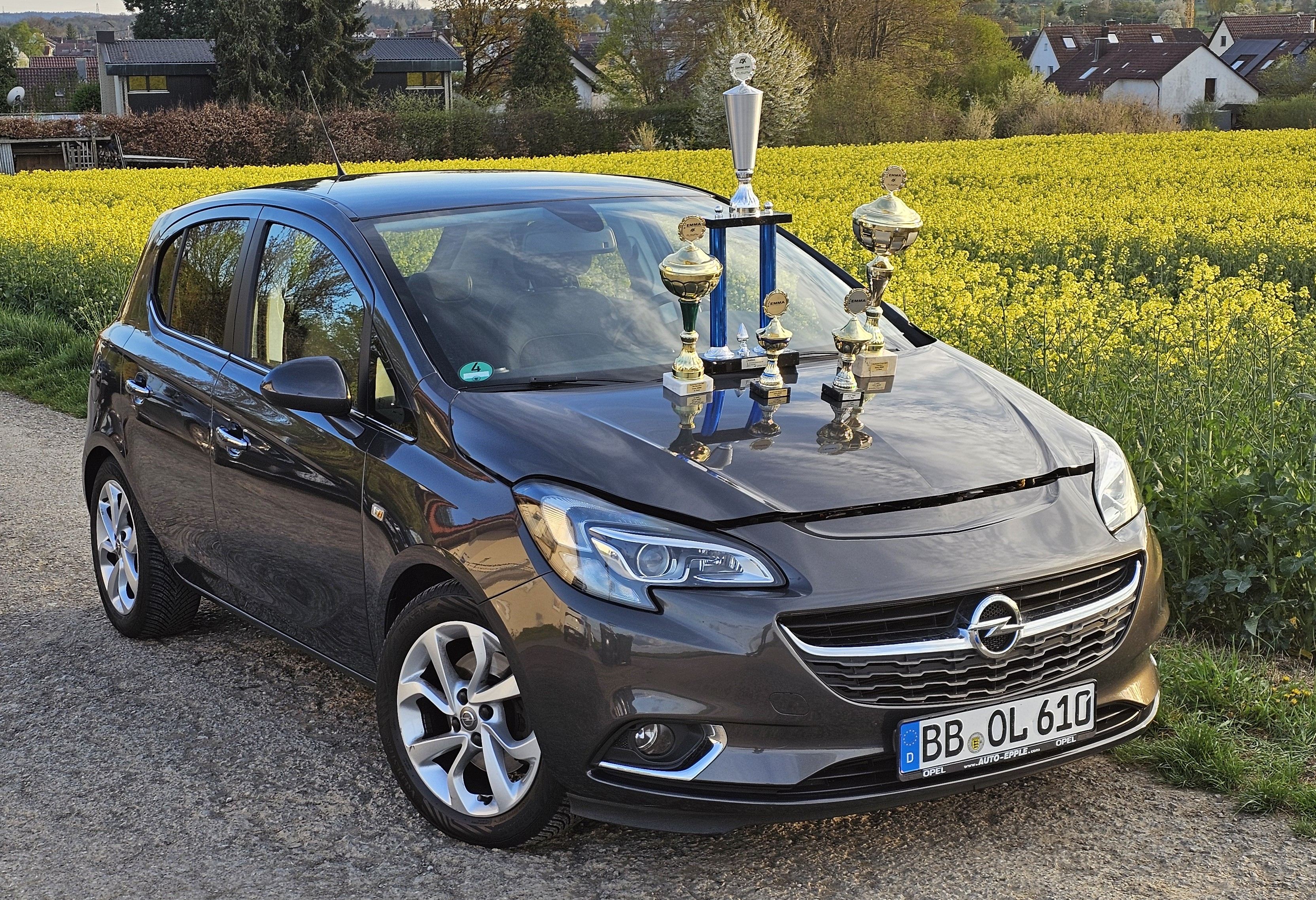
Photos of the finished build. Click any image for full size.
Description
Opel Corsa Sound Quality System
This project was based on an Opel Corsa used as a compact daily car and developed into a serious sound quality competition vehicle. The main goal was not maximum volume or visual show effect, but accurate music reproduction, stable staging, clean tonal balance and a carefully controlled installation within a limited competition budget.
The result was 1st place at the EMMA European Championship 2025 in the Entry 3000€ class. This result was especially important because the system was built within a budget-limited category. It showed that system design, acoustic development, installation quality and DSP tuning can be more decisive than simply using the most expensive components.
System concept
The system was designed around an active front stage with separate tweeters, midrange drivers and midbass drivers, supported by a dedicated subwoofer. The signal path was kept as clean and controllable as possible, using an Android-based source, a digital USB-to-TOSLINK interface and a DSP amplifier.
The head unit was a TEYES CC3 2K Android unit. Instead of relying only on the analogue output of the head unit, the audio signal was sent digitally via USB to a DSD TECH SH-AU02A USB-to-TOSLINK converter. From there, the signal was transferred optically to the Mosconi ONE 8|10 DSP amplifier. This gave the system a cleaner and more stable basis for further processing and tuning.
A Gladen RTC 2 remote controller was integrated into the radio trim and used as the main volume control for the Mosconi DSP amplifier. This made the system easier to operate from the driver’s seat while keeping the interior clean and practical.
Front stage
The front stage consisted of Hertz ML 280.3 Legend tweeters, Morel Virtus Nano Carbon MW4 midrange drivers and SOaudio SO 165/38 midbass drivers. The main acoustic work of the project was focused on the position, orientation and integration of these drivers.
Before the final tweeter mounts were made, the tweeter position was tested with a temporary suction-cup holder attached to the windscreen. This allowed different heights, angles and distances from the A-pillar area to be tested quickly. The final position was selected based on listening tests, with attention to stage height, image focus, tonal balance and integration with the midrange drivers.
The midrange section was one of the key parts of the project. Instead of using a standard dashboard or door location, dedicated one-litre sealed enclosures were designed for the lower windscreen area. Their shape and position were developed through templates, test fitting and several physical iterations. The final enclosures were 3D-printed, assembled, finished and trimmed to match the interior.
This approach made it possible to control the acoustic loading and orientation of the Morel MW4 midrange drivers much more precisely than with a conventional installation. The midrange drivers were able to play from approximately 140–150 Hz, which helped to move a significant part of the vocal and instrument range away from the doors and into a more favourable position for sound stage formation.
The tweeter housings were also custom-made after the final position had been chosen. Together with the midrange enclosures, they formed a compact but very effective front-stage layout aimed at a high, focused and stable stereo image.
Door and midbass installation
The midbass drivers were installed in the original front-door locations. The doors were treated with damping material to reduce panel resonance and improve the behaviour of the door as an acoustic environment. The service openings were closed with rigid panels, and the speakers were mounted on solid adapter rings with additional sealing.
The aim was not only to install better midbass drivers, but also to make the doors work properly as part of the system. A midbass driver in a car door is highly dependent on the mechanical quality of the installation. Rigid mounting, sealing and acoustic separation between the front and rear sides of the driver are essential for clean and controlled reproduction in the lower midrange and upper bass region.
The door cards were also treated to reduce vibrations and unwanted noise. This helped the SOaudio SO 165/38 drivers integrate more cleanly with the midrange drivers and improved the overall stability of the front stage.
Subwoofer and boot-floor installation
The subwoofer section used an Audison APS 10 D driven by an Audio System F2-190 two-channel amplifier in bridged mode. The subwoofer, amplifiers, digital interface and wiring were integrated under the boot floor, keeping the luggage compartment usable for everyday driving.
The Mosconi ONE 8|10 DSP amplifier powered the active front stage and handled system processing. The Audio System F2-190 provided dedicated power for the subwoofer. This separation allowed the front stage and low-frequency section to be tuned independently and kept the overall system architecture clear and serviceable.
The boot installation was designed as a compact technical layout rather than a show installation. Custom 3D-printed cable holders were used to keep the wiring fixed, separated and serviceable. This reduced the risk of vibration-related noise, mechanical wear or accidental cable movement.
A connection diagram was also integrated into the boot installation. It could be placed next to the electronics for service work, competition checks and demonstrations. This made the system layout easy to understand without removing components and reflected the structured approach used throughout the project.
Power supply and grounding
The electrical system was upgraded to support the audio installation. Dedicated power cabling, fusing and distribution were used for the amplifiers. The installation included 20 mm² and 10 mm² power wiring, 40 A and 80 A fuses and a 1 F capacitor.
An additional battery-to-chassis ground cable was installed in the engine bay. This supplementary ground connection helped improve the electrical foundation of the system and reduced the risk of voltage drop or ground-related noise. Stable power supply was especially important because the system used several active channels, a DSP amplifier and a separate bridged subwoofer amplifier.
Sound treatment
A large part of the work was dedicated to sound treatment of the vehicle body. The doors, floor, rear side areas, boot and roof were treated with damping and absorbing materials. The purpose was to reduce panel resonance, road noise and unwanted reflections, and to provide a quieter and more stable acoustic environment for the audio system.
In a sound quality project, sound treatment is not only about making the car quieter. It also improves the behaviour of the loudspeakers, especially in the doors and low-frequency range. By reducing vibration and uncontrolled panel movement, the system can reproduce bass, midbass and vocals with more precision and less coloration.
Custom fabrication
3D printing was used throughout the project for both acoustic and practical installation parts. The midrange enclosures, tweeter housings, USB-to-TOSLINK interface holder and cable holders were all designed specifically for this vehicle.
This was not a simple component replacement project. Important acoustic positions were first tested, then converted into permanent mechanical parts. The process included measuring, templating, test fitting, 3D modelling, 3D printing, gluing, finishing, trimming and final installation.
This iterative method made it possible to combine acoustic performance with a relatively clean interior appearance. The result was a system that remained usable in everyday life while still being developed for competition-level sound quality.
Tuning and result
After the installation work, the system was tuned using the possibilities of the Mosconi DSP amplifier. The active configuration allowed each driver group to be adjusted individually in level, delay, crossover frequency and equalisation. This was essential for integrating the tweeters, midrange drivers, door midbasses and subwoofer into one coherent sound stage.
The final system achieved a high level of tonal balance, focus and musical realism within the restrictions of the Entry 3000€ class. Winning 1st place at the EMMA European Championship 2025 confirmed that the concept worked: a carefully designed and tuned system in a compact everyday car can compete successfully at European level, even within a strict budget limit.
Discussion
Forum threads linked to this build, covering questions and fixes.
No discussions yet — ask a question or share your progress with the build.