Question
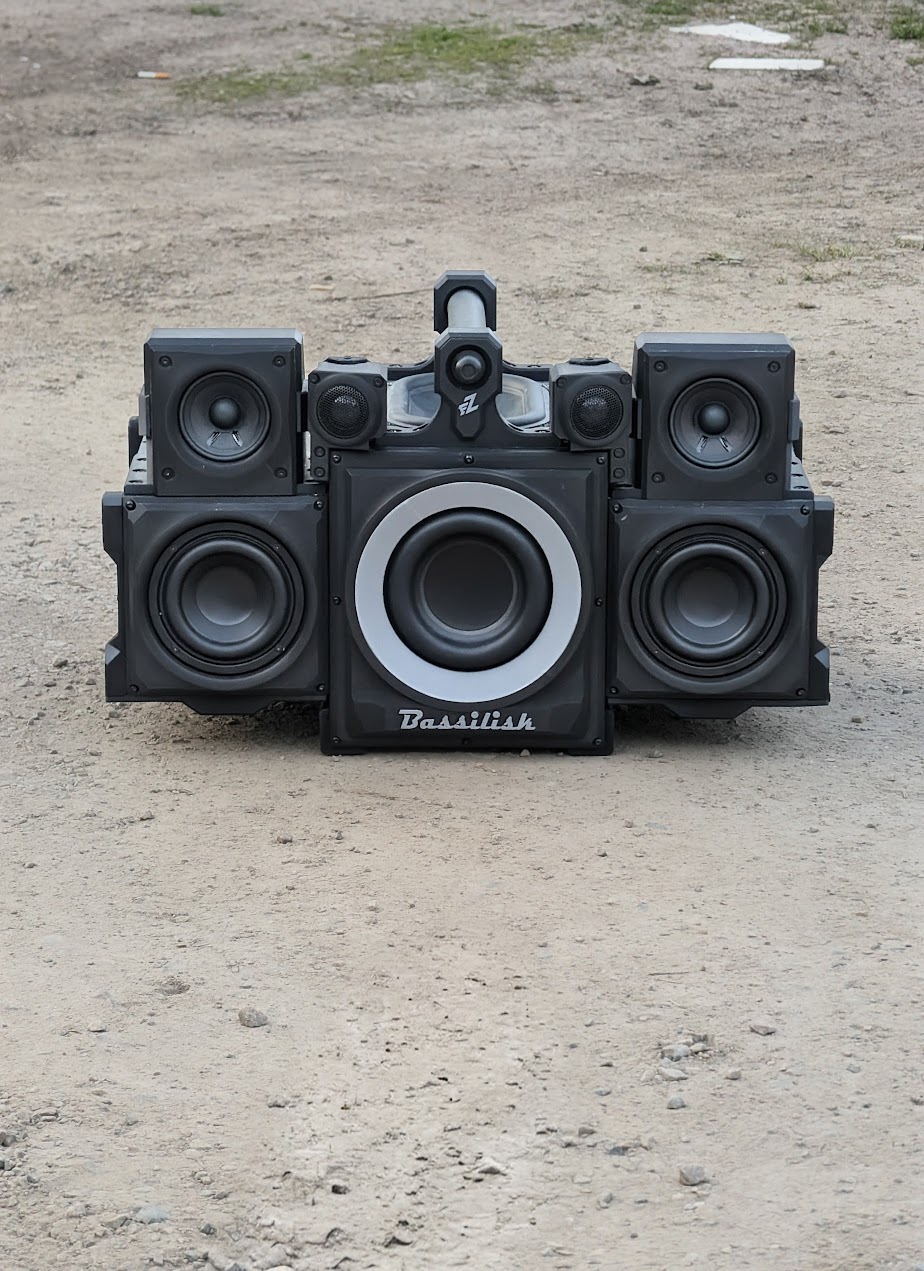
Preparing to build my first Bassilisk
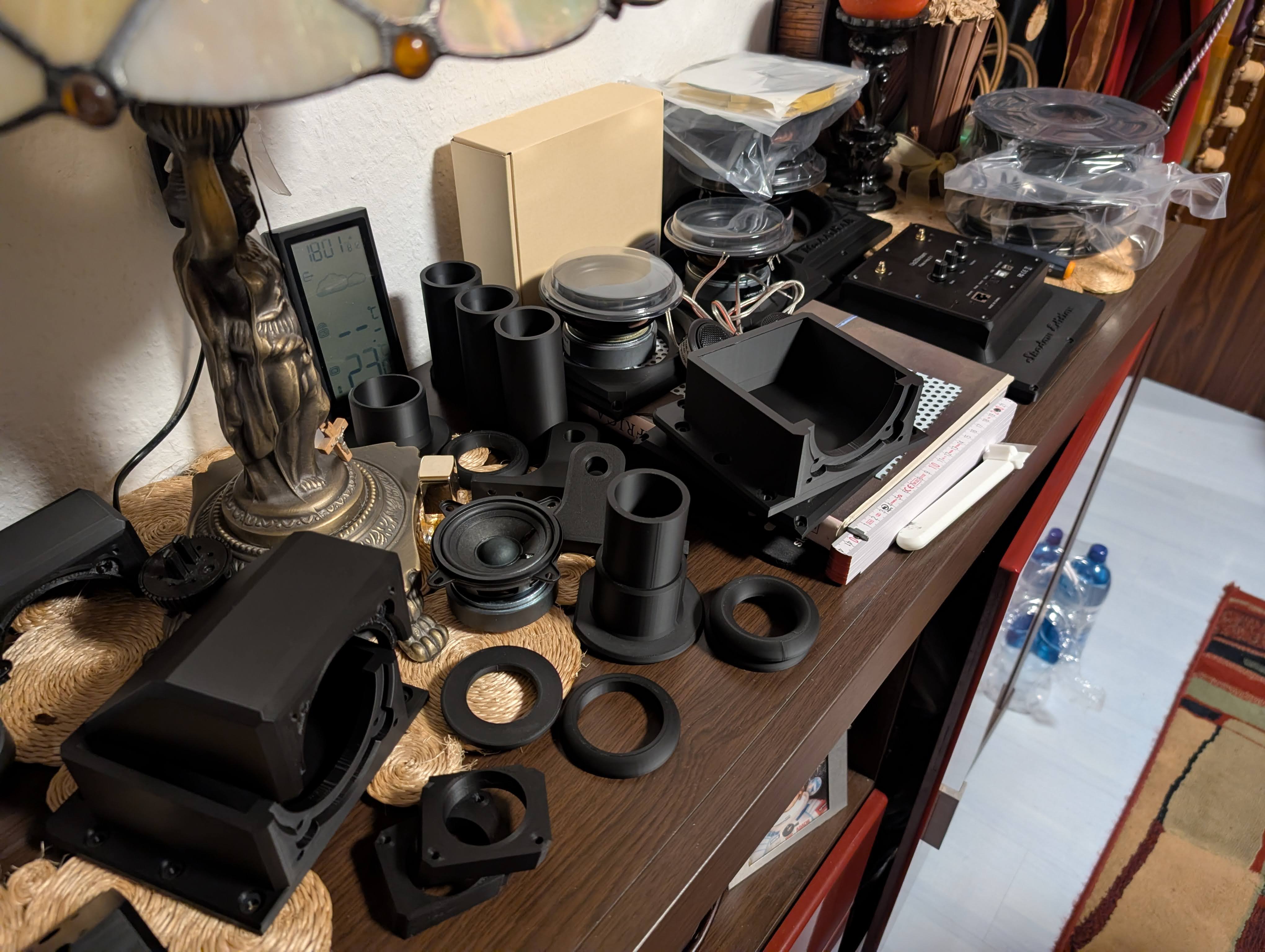
About to build my first bassilisk, 3d printed stuff wish me luck
Questions, build work, and shop talk.
About to build my first bassilisk, 3d printed stuff wish me luck
Measured response has a deep notch right at 2 kHz, exactly my crossover point. Reversed tweeter polarity and the notch filled in. So... my XO phase is wrong, not baffle step, right?

Printed (in sections, glued) a small Karlson style coupler enclosure for a 4″ driver, mostly to see if the weird slot loading does anything. Surprisingly, it does — broad midbass lift and a unique sound. Not hi fi. Very fun.
Big peak at 45 Hz, dip at 60. Single sub in the corner. Do I chase placement first or just EQ the peak down?

Faint hum that gets louder when I touch the RCA connector shell. Single amp, single source, both on the same outlet. Ground loop, or is my chassis ground floating?

Active is obviously more flexible. But passive still wins on: fewer amp channels, no DSP latency, simpler, and you can sell it as a normal speaker. For a fixed two way you will never tweak, is active overkill?
First "nice looking" build. Veneer scares me (glue, seams) but paint on MDF means a lot of priming/sanding to kill the fuzz. Which is more forgiving for a beginner?
Chasing distortion numbers. Below what THD level does it stop mattering for a home speaker at living room levels?
Did the sub crawl. Two positions measure almost equally flat. One is in the front corner, one is mid side wall. Tie breaker?
Wanted heavy stands without paying boutique prices. Printed the molds, poured concrete, demolded, capped with MDF top plates. 14kg each, dead as a brick. The top plate spikes thread into inserts I cast into the concrete.
If you are just getting into measurements: the UMIK 1 with its individual cal file is plenty for room and speaker work. EARS is fine for headphones but do not expect speaker grade accuracy. Download your mic's unique cal file from the miniDSP site — the generic one is not the same.
Starting a proper build log. Plan: Woofer: SB Acoustics SB23NRXS45 8 Mid: SB Satori MR16 Tweeter: SB Satori TW29R Amp: 3× Hypex, DSP on a miniDSP Flex Cabinet is 18mm Baltic birch, heavily braced. Cut list done, glue up this weekend. Will post measurements at each stage.
Always wanted to build a proper TL. Going classic with the Fostex FE126En full range. Line is 2m folded, lightly stuffed toward the terminus. Day 1: panels cut. The fold geometry is doing my head in.
I closed up a 3 way, then realized I had no idea which internal lead went where when a solder joint failed later. Now I label every wire and photograph the inside before the back goes on. Learn from my pain.
New builders measure a flat on axis and wonder why it sounds bright. Rooms and ears want a gentle downward tilt (Harman ish) — ruler flat anechoic usually measures as too hot in room. Aim for 1dB/octave in room above the bass.
Picked these up for $200. Plan: new caps in the crossover, refinish the raw birch, replace the crumbling surrounds on the woofers. The horns measure fine — Klipsch built these to last. Caps first.
"It is for modal smoothing , honey. Four subs flattens the room response. It is science." She is not buying it. Send help (and a fourth sub).
Not talking about $1000 cables. Talking gauge: for a 4 ohm speaker on a 5m run, does 12 AWG vs 16 AWG actually matter, or is it within noise?
Printing flared port ends in PETG instead of buying them saved me a ton. A 35mm roundover basically eliminated my chuffing at high excursion. Keep the inner surface smooth — sand the layer lines or you add turbulence.
PE has Dayton drivers 20% off this week. Good time to grab those UM series subs or RS woofers if a build is on your list.
Got access to a Klippel NFS and ran a cheap £30 5″ paper driver out of curiosity. Honestly? The on axis is clean and the directivity is better controlled than a famous driver costing 4× as much. Marketing is a hell of a drug. Data inside.
Sealed midrange sub enclosure, 1.5L. Long fiber wool, polyfill, or acoustic foam? Trying to kill the internal reflection without over damping.
Did a knuckle rap + measurement test: 18mm braced panel vs 25mm unbraced. The braced thinner panel was deader . Stop adding mass, add stiffness. A few well placed window braces beat another 6mm of MDF.
Pairing an SB Acoustics SB17NRX woofer with a 28mm fabric dome. Both can comfortably cross around 2–2.5 kHz on paper. Where would you put it, and LR2 or LR4?
Ambitious one. Building a true ribbon tweeter from scratch: neodymium bar magnets, aluminium foil ribbon, a step up transformer I wound myself. Magnet array assembled (and nearly took a finger off). Foil tensioning next.